Loading...

List of Issues

    Chinese Journal of Chromatography
    2026, Vol. 44, No. 7
    Online: 08 July 2026

    For Selected: Toggle Thumbnails
    Reviews
    Research progress on sample pretreatment technology for the analysis of new pollutants in food using composite covalent organic framework materials
    SUN Zeyi, YUAN Guangnian, NIU Yuanye, MA Jiping
    2026, 44 (7):  731-740.  DOI: 10.3724/SP.J.1123.2025.08002
    Abstract ( 171 )   HTML ( 13 )   PDF (1869KB) ( 45 )  

    New pollutants are recently identified or recognized chemical substances. They pose risks to ecosystems or human health. Many are not yet regulated or lack effective control measures. These pollutants show biological toxicity, environmental persistence, and bioaccumulation. They threaten human health. In recent years, their detection frequency in food has increased. Efficient detection technologies are urgently needed. Sample pretreatment is key for analyzing new pollutants in food. The core of pretreatment lies in the preparation and selection of adsorbent materials. Covalent organic frameworks (COFs) are porous crystalline materials. They are formed by light elements linked through covalent bonds. COFs have highly ordered crystal structures. Their pore sizes can be adjusted. Surface properties are functionalizable. They show excellent chemical and thermal stability. Composite covalent organic framework materials combine COFs with other materials. This is achieved through physical or chemical methods. The composites exhibit synergistic effects. They retain the unique properties of both COFs and the other materials. This article reviews common sample pretreatment techniques for new pollutants in food. These include solid-phase extraction (SPE), solid-phase microextraction (SPME), stir bar sorptive extraction (SBSE), dispersive solid-phase extraction (DSPE), and magnetic solid-phase extraction (MSPE). SPE is a chromatographic technique. It removes impurities from solid or liquid samples. It also enriches target compounds. SPE offers high enrichment factors and low solvent use. It is easy to automate. SPME balances samples between solid and liquid phases. It integrates sampling, extraction, and concentration. SPME uses little or no solvent. It is simple and automatable. It can be coupled with other techniques online. SBSE evolved from SPME. It has a larger stationary phase volume and higher capacity. SBSE uses a stir bar with a magnetic core. The bar is coated with an extraction layer. Stirring ensures full contact with analytes. SBSE is solvent-free or uses minimal solvent. It is accurate, fast, and easy to automate. DSPE disperses adsorbents into sample matrices. It increases contact area between adsorbents and analytes. DSPE simplifies sample processing. It avoids sample loss. MSPE uses magnetic or magnetizable materials as adsorbents. It captures target analytes efficiently. MSPE is simple to prepare and separate. Pipette-tip-SPE (PT-SPE) is a newer technique. It packs adsorbents into pipette tips. PT-SPE is flexible, low-cost, and needs small sample volumes. This article details types of composite COF materials. These include magnetic COF (MCOF), sponge-COF, molecularly imprinted polymer-COF (MIP-COF), metal-organic framework-COF (MOF-COF), and electrospun-COF. MCOF combines COFs with magnetic nanoparticles. It enables quick separation under a magnetic field. Sponge-COF grows COFs on sponge fibers. It enhances adsorption capacity and mass transfer. MIP-COF integrates molecularly imprinted polymers with COFs. It offers specific recognition sites. MOF-COF combines metal-organic frameworks with COFs. It introduces metal active sites. Electrospun-COF embeds COFs into polymer nanofibers. It improves mechanical performance and stability. These composite materials are utilized in the pretreatment of food samples, where they effectively enrich trace levels of new pollutants, including perfluoroalkyl substances, antibiotics, personal care products, endocrine disruptors, and flame retardants, within complex food matrices. When coupled with analytical techniques such as high-performance liquid chromatography (HPLC), HPLC-tandem mass spectrometry (HPLC-MS/MS), gas chromatography (GC), gas chromatography-mass spectrometry (GC-MS), molecular fluorescence spectroscopy, and Raman spectroscopy, they facilitate highly accurate and sensitive detection of these new pollutants in food products. Future directions include improving synthesis methods. Current methods are time-consuming and costly. New techniques like water-phase synthesis are promising. Multifunctional composites are needed. They should adsorb multiple pollutant types. Automated and high-throughput extraction technologies will be developed. Green and scalable production processes are essential for industrial applications. In conclusion, composite COF materials show great potential. They enhance the efficiency and accuracy of food pollutant analysis. Further research will expand their applications and improve performance.

    Articles
    Exploring the mechanism of action of Synotis solidaginea in treating acute eczema based on ultra performance liquid chromatography-linear trap quadrupole-Orbitrap mass spectrometry, network pharmacology and animal experiments
    DANZENG Cizhen, FU Xinchen, LUO Paier, LUO Yachun, SHAO Meijuan, XIE Shuya, GE Haoyu, PENG Xifan, PUBU Zhaxi, YAN Zhihong
    2026, 44 (7):  741-763.  DOI: 10.3724/SP.J.1123.2025.10013
    Abstract ( 92 )   HTML ( 20 )   PDF (3872KB) ( 20 )  

    This study employed an integrated strategy combining ultra performance liquid chromatography-linear trap quadrupole-Orbitrap mass spectrometry (UPLC-LTQ-Orbitrap-MS), network pharmacology, molecular docking simulations, and in vivo animal experimentation to systematically analyze the active components of SynotissolidagineaS. solidaginea) and to elucidate its underlying therapeutic mechanism in the treatment of acute eczema. Initially, the UPLC-LTQ-Orbitrap-MS method was utilized to perform a comprehensive chemical profiling of S. solidaginea extract. Based on accurate mass, multistage fragmentation spectra, and cross-validation with literature and reference standards, 59 constituents were unambiguously or tentatively identified. Subsequently, a network pharmacology framework was established to predict the potential pharmacological mechanisms of the identified compounds. Among the characterized constituents, seven bioactive ingredients—namely isorhamnetin, kaempferol, luteolin, quercetin, myricetin, betaine, and rosmarinic acid—were selected as the primary active components based on their relative abundance and favorable oral bioavailability and drug-likeness properties as predicted by the Traditional Chinese Medicine Systems Pharmacology Database and Analysis Platform (TCMSP). The corresponding potential protein targets of these seven compounds were systematically screened using the TCMSP database and the SwissTargetPrediction tool, resulting in the identification of 192 component-associated targets after the removal of duplicate entries. Concurrently, a comprehensive collection of disease-associated targets was curated for acute eczema. By querying the GeneCards database and the Online Mendelian Inheritance in Man (OMIM) database with the keyword “acute eczema”, a total of 2 214 distinct therapeutic targets relevant to the pathogenesis and progression of the dermatological condition were retrieved. Through the construction of a Venn diagram to map the component-related targets onto the disease-specific target set, a core network comprising 75 overlapping targets was identified as the potential therapeutic intersection through which S. solidaginea exerts its pharmacological effects against acute eczema. To further investigate the functional interactions and biological significance of these 75 intersecting proteins, a protein-protein interaction (PPI) network was constructed using the STRING database (version 12.0) and subsequently visualized and topologically analyzed using Cytoscape 3.10.1 software. Network topological analysis, specifically evaluating the degree centrality, betweenness centrality, and closeness centrality, highlighted SRC proto-oncogene tyrosine-protein kinase and matrix metalloproteinase 9 (MMP9) as the most prominent hub nodes within the network, suggesting their pivotal roles in mediating the therapeutic activity. Furthermore, Gene Ontology (GO) functional annotation and Kyoto Encyclopedia of Genes and Genomes (KEGG) pathway enrichment analyses were conducted on the 75 potential targets. The GO enrichment analysis indicated that these targets were predominantly involved in biological processes related to the regulation of inflammatory responses, cellular response to oxidative stress, and positive modulation of cytokine production. The KEGG pathway analysis further revealed that the therapeutic effects of S. solidaginea are likely orchestrated through the modulation of several critical signaling cascades, with the PI3K/Akt signaling pathway being the most significantly enriched pathway. To validate the credibility of these computational predictions at the molecular level, molecular docking simulations were performed to evaluate the binding affinities and interaction modes between the core active flavonoids and the identified hub targets. The docking results demonstrated that isorhamnetin, luteolin, quercetin, kaempferol, and myricetin all exhibited strong and stable binding conformations within the active catalytic pockets of both SRC and MMP9. These compounds were observed to form critical hydrogen bonds and hydrophobic interactions with key amino acid residues, indicating a favorable thermodynamic profile and a high potential for functional inhibition of these key targets in vivo. The final phase of this investigation involved experimental validation using an established murine model of acute eczema. The model was successfully induced on the dorsal skin of KM mice through repeated topical sensitization and challenge with 2,4-dinitrochlorobenzene. Following model establishment, the therapeutic impact of S. solidaginea administration was rigorously assessed at the macroscopic, microscopic, and molecular levels. Macroscopic observation and scoring of clinical symptoms revealed a significant amelioration of erythema, edema, and excoriation in the treatment groups. Histopathological examination of skin tissue sections stained with hematoxylin and eosin (HE) confirmed that S. solidaginea treatment markedly reduced epidermal hyperplasia, spongiosis, and dermal inflammatory cell infiltration. Mechanistically, quantitative analysis via enzyme-linked immunosorbent assay (ELISA) demonstrated that S. solidaginea treatment effectively down-regulated the serum concentrations of the key pro-inflammatory cytokines tumor necrosis factor-alpha (TNF-α), interleukin-6 (IL-6), and interleukin-17 (IL-17), while concurrently restoring the level of interferon-gamma (IFN-γ). This modulation of cytokine profiles indicates a beneficial shift toward restoring the T helper type 1 cell/T helper type 2 cell (Th1/Th2) immune balance, which is typically dysregulated in acute eczematous conditions. Most importantly, Western blot analysis of the lesional skin tissue provided direct biochemical evidence that the extract of S. solidaginea significantly inhibited the phosphorylation of phosphatidylinositol 3-kinase (PI3K) and protein kinase B (Akt), thereby confirming the suppression of the PI3K/Akt signaling pathway in vivo. In conclusion, this methodological approach enables the rapid, effective, and comprehensive characterization of the phytochemical profile of S. solidaginea. Furthermore, this study preliminarily elucidates that the therapeutic mechanism of this medicinal plant in treating acute eczema involves a multi-component and multi-target synergistic action, primarily through the alleviation of the cutaneous inflammatory response and the restoration of immune homeostasis via the inhibition of the PI3K/Akt signaling axis. These findings provide a robust scientific foundation and a valuable reference for the further development, clinical application, and quality control of S. solidaginea.

    Determination of 29 per- and polyfluoroalkyl substances and 22 organophosphate esters and diester metabolites in human serum by high-throughput solid-phase extraction- ultra performance liquid chromatography- high resolution mass spectrometry
    ZHAO Shiqi, DING Hao, ZHANG Xuwenqi, HOU Minmin, ZHOU Tingting, SHI Yali, CAI Yaqi
    2026, 44 (7):  764-776.  DOI: 10.3724/SP.J.1123.2025.07008
    Abstract ( 180 )   HTML ( 21 )   PDF (1523KB) ( 77 )  

    Monitoring pollutants in human blood is a crucial basis for assessing human exposure levels and health risks. Per- and polyfluoroalkyl substances (PFAS), organophosphate esters (OPEs), and their diester metabolites (di-OPEs) are widespread environmental co-contaminants with significant toxic effects, making it crucial to monitor their internal human exposure levels. However, existing studies have predominantly investigated these substances in isolation, lacking comprehensive research that simultaneously quantifies PFAS, OPEs, and di-OPEs in human serum. Based on the pretreatment method of 96-well solid phase extraction columns, this study compared three extraction columns and optimized the pretreatment steps to establish an ultra performance liquid chromatography-high resolution mass spectrometry (UPLC-HRMS) method for 29 PFAS, 17 OPEs, and 5 di-OPEs in human serum samples. Phree PLR 96-Wellplate was used as a cleanup plate. 300 µL of 1% formic acid in acetonitrile, 100 µL of the serum sample, and internal standards were added to the cleanup device in sequence. After standing for 5 minutes, the 96-well plate positive pressure device was used to press the mixture into the 96-well collection plate. Finally, the sample was eluted with 100 µL of 1% formic acid in acetonitrile. The eluate was collected and concentrated for the detection of PFAS, OPEs, and di-OPEs by UPLC-HRMS. PFAS and OPEs were detected using an Acclaim RSLC 120 C18 column, while di-OPEs were detected using an Acquity UPLC BEH C18 column. Both were subjected to gradient elution with methanol and 5 mmol/L ammonium acetate in water as the mobile phases. Sample ionization was performed using a heated electrospray ionization source (H-ESI). PFAS and di-OPEs were analyzed in negative ion mode, while OPEs were analyzed in positive ion mode. Data acquisition was conducted in full-scan/data-dependent tandem mass spectrometry (Full MS/ddMS2) mode. Quantification was achieved using the internal standard calibration method to ensure measurement accuracy. The results showed that under the optimized conditions, the target compounds had good linear relationships in the range of 0.05–50 ng/mL (R2 > 0.99), and the method detection limits (MDLs) of 29 PFAS, 17 OPEs and 5 di-OPEs were 0.000 120–0.274 ng/mL, 0.011 0–0.250 ng/mL, and 0.012 0–0.220 ng/mL, respectively, and the spiked recoveries were between 45.9% and 147.8%. The relative standard deviations (RSDs) were 1.2%–29.0%. Most PFAS and di-OPEs had matrix enhancement effects, and most OPEs had matrix inhibition effects. Among them, hexafluoropropylene oxide dimer acid (GenX) (196.5%) and trimethylphenyl phosphate (TMPP) (54.6%) had significant matrix enhancement and inhibition effects, respectively, which could be corrected with appropriate internal standards. The recoveries of these two substances after correction were 127.3% and 78.7%, respectively, which met the analysis requirements. The proposed approach offers significant practical benefits, combining straightforward operation with shortened extraction time and enhanced throughput, which was validated through analysis of 15 human serum samples collected in Jinan in 2024. The total contents of 29 PFAS were 6.71–379 ng/mL, with a median value of 22.9 ng/mL. Eight PFAS were detected with a detection frequency of 100.0%, with median contents of perfluorooctanoic acid (PFOA) and perfluorooctane sulfonate (PFOS) reaching 8.96 ng/mL and 4.07 ng/mL, respectively. The total contents of 17 OPEs were 0.015 0–10.5 ng/mL, with a median value of 2.81 ng/mL. The most frequently detected OPEs, with detection frequencies exceeding 60.0%, were triethyl phosphate (TEP), tri-n-butyl phosphate (TnBP), and triphenyl phosphate (TPHP). The total contents of 5 di-OPEs were <MDL–0.443 ng/mL, with a median value of 0.015 0 ng/mL. Therefore, the combined exposure to these pollutants in human blood and its potential health risks demand serious attention.

    Simultaneous determination of five common pyrethroid metabolites in urine using liquid-liquid extraction coupled with ultra performance liquid chromatography-tandem mass spectrometry
    ZHANG Xiaomei, MENG Xiangjuan, HU Yue, LIU Xiaodong
    2026, 44 (7):  777-784.  DOI: 10.3724/SP.J.1123.2025.10017
    Abstract ( 118 )   HTML ( 14 )   PDF (1062KB) ( 32 )  

    Pyrethroids are extensively employed in agricultural pest management and household sanitation practices. However, their widespread use has raised concerns as they pose a multitude of health risks to humans. Consequently, the development of precise, highly sensitive, and efficient biomonitoring techniques for evaluating internal exposure levels of pyrethroids across different populations has emerged as a paramount goal in the field of environmental exposure and health effect research. This study developed a method using ultra performance liquid chromatography-tandem mass spectrometry (UPLC-MS/MS) for the simultaneous determination of five common pyrethroid metabolites in urine, with sample pretreatment involving hydrochloric acid hydrolysis and liquid-liquid extraction. The method was optimized for mass spectrometric acquisition parameters and liquid chromatography separation conditions. Chromatographic separation was successfully accomplished utilizing a BEH C18 column (100 mm×2.1 mm,1.7 μm). Mass spectrometric data were acquired in negative ion mode under multiple reaction monitoring (MRM) conditions. Among the analytes, trans-3-(2,2-dichlorovinyl)-2,2-dimethylcyclopropanecarboxylic acid (trans-DCCA) and cis-3-(2,2-dichlorovinyl)-2,2-dimethylcyclopropanecarboxylic acid (cis-DCCA) are isomers, as are 2-phenoxybenzoic acid (2-PBA) and 3-phenoxybenzoic acid (3-PBA), and they share identical MS acquisition parameters. Identification was based on reference standards and retention times. The mobile phase consisted of 0.1% acetic acid in water (A) and acetonitrile (B). The gradient elution program was as follows: 0-0.5 min, 10%B; 0.5-4.5 min, 10%B-70%B; 4.5-5 min, 70%B-100%B; 5-7 min, 100%B; 7-8 min, 100%B-10%B; 8-10 min, 10%B. The optimization of urine sample pretreatment conditions was divided into two parts: hydrolysis and extraction. Using the recoveries of target analytes as the evaluation metric, parameters including the dosage of hydrolysis reagent, hydrolysis temperature and duration, as well as the type, dosage, and extraction time of the extraction solvent were systematically optimized. The optimized pretreatment protocol is delineated as follows: Initially, 40 µL of the 2-PBA internal standard working solution was precisely added to 1 mL of urine sample, followed by thorough mixing to ensure homogeneity. Subsequently, 150 µL of hydrochloric acid (2 mol/L) was introduced to facilitate hydrolysis, which was allowed to proceed at ambient room temperature for a duration of 30 min. Finally, extraction was carried out using 2 mL of ethyl acetate, accompanied by vigorous shaking for 30 min to maximize extraction efficiency. Following centrifugation, the organic phase was separated, evaporated to near dryness, and reconstituted with 1.0 mL of acetonitrile prior to instrumental analysis. The matrix effects were evaluated using pure solvent and matrix-matched standards. Among the five analytes, three exhibited a moderate matrix effect, while two showed a weak matrix effect. The recovery performance using 2-PBA as an internal standard was also assessed. Consequently, a combination of the working curve and the internal standard method was selected for the quantification of the target analytes. Based on this, the methodological parameters of the method were validated. The results indicate that the five pyrethroid metabolites exhibited good linearity, with correlation coefficients of the calibration curves all exceeding 0.995. The limits of detection (LODs) ranged from 0.13 ng/mL to 1.32 ng/mL, and the limits of quantification (LOQs) ranged from 0.44 ng/mL to 4.39 ng/mL. The average recoveries of the samples at three spiked levels of 20, 50, and 80 ng/mL ranged from 91.0% to 102.0%. The intra-batch precision was between 1.1% and 8.1%, while the inter-batch precision was between 1.1% and 4.6%. Sample stability was demonstrated for at least one week when stored at 4 ℃. The established method was applied to analyze 18 urine samples from the general population. Neither cis-DCCA nor 4-fluoro-3-phenoxybenzoic acid (4F-3PBA) was detected in any sample. The mass concentration of 3-PBA ranged from 0.69 ng/mL to 1.59 ng/mL, with a detection rate as high as 88.9%. These results are largely consistent with screening studies on human pyrethroid metabolite levels reported in domestic and international literature in terms of both the detection rate and mass concentration range of 3-PBA. The presence of 3-PBA may originate from household insecticide exposure or dietary sources. The method demonstrates simple and efficient sample pretreatment, strong cost-effectiveness, low LODs, and high accuracy and precision. It can therefore serve as a reliable technical reference for monitoring and exposure assessment in various populations, particularly sensitive groups such as the general population, pregnant women, and children.

    Value assignment technology for 1,3-oleic-2-palmitic triglyceride purity reference material
    WANG Xinyu, WANG Ying, XU Mengqian, ZHOU Xia, CHU Hongtao, ZHANG Qinghe, LI Xiuqin
    2026, 44 (7):  785-794.  DOI: 10.3724/SP.J.1123.2025.10031
    Abstract ( 81 )   HTML ( 16 )   PDF (1778KB) ( 15 )  

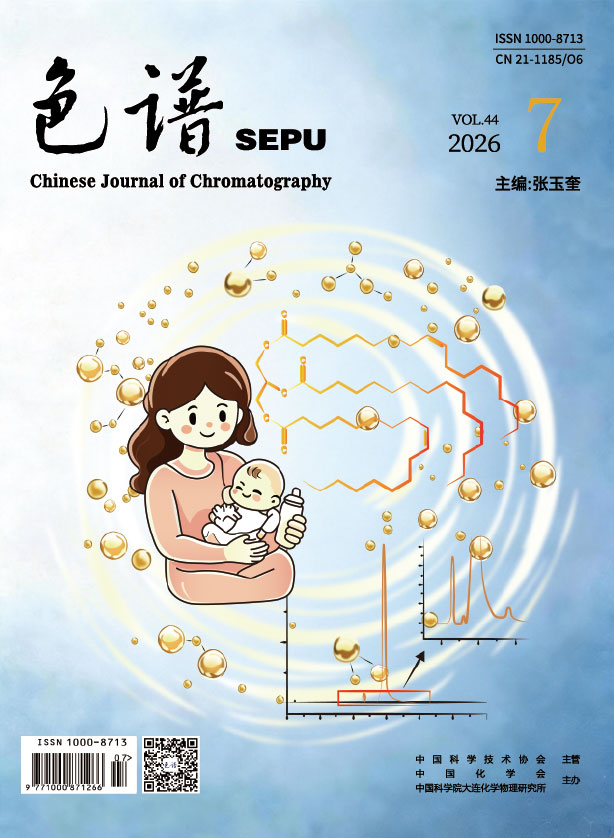
    1,3-Oleic-2-palmitic triglyceride (OPO) has received widespread attention as a nutritional fortifier allowed to be added to infant formulas, and there is an urgent need to develop high-purity certified reference material (CRM) to meet the metrological traceability requirements of relevant tests. Value assignment methods for pure materials are a key technical challenge in the development of high-purity CRMs. The commonly used mass balance (MB) method indirectly determines the purity of the material by subtracting impurities, which involves the accurate quantification of structurally similar impurities, moisture, volatile solvents, and non-volatile impurities. Among these steps, the separation and analysis of structurally similar impurities of the main component are the key to MB method. Owing to the lack of ultraviolet/fluorescence chromophores, OPO cannot be effectively detected by liquid chromatography with terminal absorption (190–210 nm); this technique lacks sufficient sensitivity for low-level related impurities. Therefore, with a universal detector, this study established a high performance liquid chromatography-charged aerosol detector (HPLC-CAD) method for the analysis of structural analogue impurities in OPO, and applied the mass balance method to certify the purity of the reference material. On the other hand, based on quantitative nuclear magnetic resonance (qNMR) technology, a qNMR purity assignment method for OPO purity was established by optimizing key parameters such as NMR internal standards and quantitative peaks. In the mass balance method, an HPLC-CAD was selected as the core technique for quantifying trace structurally similar impurities of OPO. The chromatographic conditions were as follows: Nova Pak C8 column (150 mm×3.9 mm, 4 μm), acetonitrile-isopropanol (90∶10, volume ratio) at a flow rate of 1.0 mL/min, sample dissolved in n-hexane-isopropanol (1∶1, volume ratio) at a mass concentration of 2.0 mg/mL with an injection volume of 5 μL. Under these conditions, four structurally related trace impurities were baseline-separated and accurately quantified. Method validation showed that in the mass concentration range of 0.001-0.025 mg/mL, good linear relationship was obtained (R²=0.999 1). The limits of detection (LOD) and quantification (LOQ) were 0.000 5 mg/mL and 0.001 mg/mL, respectively, meeting the requirements for quantitative analysis. Six replicate measurements gave an average total impurity content of 1.23% (standard deviation 0.03%), corresponding to an OPO main component content of 98.77%. In addition, Karl Fischer coulometric titration was used to determine moisture content, headspace gas chromatography-flame ionization detection (HS-GC-FID) was used to analyze residual volatile organic solvents (VOC), and thermogravimetric analysis was used to determine non-volatile impurities. The purity of OPO was calculated as 98.51% by subtracting related impurities, moisture, VOC and non-volatile residues. In qNMR, direct and accurate quantification of the main component was achieved by optimizing key parameters: deuterated chloroform was selected as the solvent; ethyl paraben was used as the internal standard; selected chemical shifts of 2.33 (OPO) and 6.88 (ethyl paraben) as quantitative peaks. Accurately weigh approximately 10.0 mg of OPO and 3.0 mg of the internal standard in a brown bottle, dissolved in 0.50 mL of deuterated chloroform, and transferred to a 5 mm NMR tube. After six parallel measurements, the average purity of OPO was calculated to be 98.82%, with a standard deviation of 0.21%. Additionally, the homogeneity and stability of the candidate high-purity OPO reference material were evaluated. The uncertainties introduced by value assignment, inhomogeneity, and instability were evaluated. The results showed that the certified purity value of OPO was 98.7%, with a relative expanded uncertainty of 0.7% (k=2,where k is the coverage factor corresponding to a confidence probability of approximately 95% under the normal distribution). The successful development of this certified reference material provides a traceability standard for relevant detections and fills the gap in OPO purity reference material.

    Preparation of chiral micro-packed high performance liquid chromatography column with small-size silica gel coated with amylose tris(3,5-dimethylphenylcarbamate)
    ZHANG Chenggui, LONG Yixing, LIU Heng, SONG Yincui, LIANG Yuntao, YUAN Liming
    2026, 44 (7):  795-805.  DOI: 10.3724/SP.J.1123.2025.07016
    Abstract ( 158 )   HTML ( 11 )   PDF (2485KB) ( 32 )  

    The separation of chiral compounds using common dimension chiral chromatographic columns consumes a large of mobile phase and a long time. This is mainly due to the fact that the inner diameter of common chiral chromatographic column is usually 4.6 mm and the column length is 25 cm. The larger column volume requires more mobile phase to drive the sample through the separation process, and the longer column length increases the migration path of the sample within the column, resulting in an extended separation time. Moreover, the common dimension chiral column is filled more stationary phase which is usually expensive. The micro-packed column, due to their structural characteristics, with inner diameters typically controlled and a few millimeters and significantly shortened column lengths, show broad application prospects in improving separation efficiency, achieving miniaturization of separation instruments, and reducing the consumption of stationary and mobile phases. In this study, amylose tris(3,5-dimethylphenylcarbamate) (ADMPC) was used as the chiral selector. Amylose molecules have a helical structure, and the size of the helical cavity and the chiral environment can be regulated through substituent modification. The introduction of 3,5-dimethylphenylcarbamate groups can enhance the hydrophobic interaction, hydrogen bonding, and π-π stacking between ADMPC and chiral compounds, thereby improving chiral recognition ability. Due to its excellent selectivity and wide applicability, it has become a research hotspot in the field of chiral separation. Two 10-millimeter-long micro-packed columns were prepared by coating ADMPC on silica gel particles with diameters of 500 nm and 1.7 μm, respectively, and were named ADMPC-1 (500 nm silica gel) and ADMPC-2 (1.7 μm silica gel). On these two micro-packed columns, 23 and 20 racemates, respectively, including various types such as alcohols, esters, ketones, and acids, achieved good separation effects. Notably, there are certain differences in separation selectivity between these two micro-packed columns, showing a certain degree of complementarity. Moreover, these two micro-packed columns also exhibit this complementary property compared with the commercial Chiralpak AD-H chiral column. The most significant advantage of micro-packed columns is the short separation time, most compounds can be separated within 8 min, and many compounds can achieve baseline separation. Commercial chiral columns, due to their longer column lengths, usually require 15-30 min or even longer for sample retention time, and some compounds may not achieve baseline separation due to insufficient resolution. The shorter column length and optimized small size silica gel of micro-packed columns significantly reduce the retention time of samples and improve resolution, which is of great significance for high-throughput screening experiments (such as chiral compound screening in drug development), and can significantly improve experimental efficiency. At the same time, due to the reduced column volume, the amount of mobile phase used is also very small. Common dimension chiral columns usually consume tens to hundreds of milliliters of mobile phase for one analysis, while the micro-packed columns in this study only require a few milliliters or even less for one analysis. This greatly reduces the generation of organic waste and lowers environmental pollution, in line with the development concept of green chemistry. In addition, compared with common dimension chiral columns, the amount of stationary phase in micro-packed columns is significantly reduced, significantly lowering the cost; at the same time, it can also provide suitable column dimemsion for the development of miniaturized chromatographic systems.

    Simultaneous determination of glycerol, acetic acid, and sodium bisulfite in compound amino acid injection (14AA) using ion exclusion chromatography
    GU Yongsheng, ZUO Limin, GAO Xiaoli, SHAN Guangzhi, ZHAO Jun
    2026, 44 (7):  806-811.  DOI: 10.3724/SP.J.1123.2026.01005
    Abstract ( 107 )   HTML ( 19 )   PDF (741KB) ( 19 )  

    An ion exclusion chromatography method was established for the simultaneous determination of glycerol, acetic acid and sodium bisulfite in compound amino acid injection (14AA). No tedious sample pretreatment is required; the sample can be directly injected after filtration through a 0.22 μm membrane filter. Chromatographic separation was achieved using an Xtimate Sugar-H column (300 mm×7.8 mm, 5 μm) packed with a strong ion-exchange resin based on a rigid styrene/divinylbenzene matrix, which is specially designed for the separation of sugar alcohols and organic acids via the ion-exclusion mechanism. The mobile phase was 7.5 mmol/L sulfuric acid solution, which was selected as it can suppress the ionization of target analytes and enhance their retention on the stationary phase; the amino groups of amino acid components undergo strong ionization, leading to no retention. Isocratic elution was adopted to ensure stable separation efficiency and short analysis time, with the flow rate set at 0.5 mL/min. Based on the ultraviolet absorption characteristics of the target analytes, 200 nm was selected as the detection wavelength. The column temperature was set at 65 ℃ and the injection volume was optimized to 10 μL, which ensures the detection sensitivity while avoiding column overload. The external standard method was adopted for quantitative analysis, featuring simple operation and reliable results. The method exhibited excellent specificity: blank solvent and negative matrix solution tests verified that amino acids caused no interference with the determination of target analytes, and the target analytes achieved good resolution from adjacent peaks. For the linearity investigation, standard solutions were prepared with linear ranges set as follows: 1.197–59.87 mg/mL for glycerol, 0.036 08–1.804 mg/mL for acetic acid, and 0.000 791 6–0.633 3 mg/mL for sulfite. Within these mass concentration ranges, the linear correlation coefficients (r) of all components were greater than 0.999 5, indicating an excellent linear relationship of the method. The accuracy was verified by spiked recovery tests at three levels (80%, 100% and 120% of the labeled amount), with three parallel preparations for each level. The results showed that the average recoveries of the target analytes ranged from 99.21% to 102.6%, with relative standard deviations (RSDs) of 0.09% to 0.86% (n=3), demonstrating the high accuracy of this method. The ion exclusion chromatography method established in this study can effectively eliminate the interference of the amino acid matrix in compound amino acid injection (14AA), and has the advantages of rapid analysis, simple operation, strong specificity and high accuracy, making it suitable for the routine quality control of glycerol, acetic acid and sodium bisulfite in this preparation. This method provides a reliable analytical and testing tool for the quality assurance and safety control of compound amino acid injection (14AA) during production and storage.

    Teaching Research
    “I love the lab” research training: a cationic covalent organic framework aerogel for organic dye removal
    LI Yunmeng, LI Hongyi, CAO Dongxiao, TANG Anna, KONG Deming
    2026, 44 (7):  812-820.  DOI: 10.3724/SP.J.1123.2025.10018
    Abstract ( 158 )   HTML ( 18 )   PDF (1802KB) ( 18 )  

    Methyl orange (MO) is a typical water-soluble azo organic dye. It is commonly used as an acid-base indicator in basic experiments and as a common organic dye in industrial production. It has strong polluting effects on water bodies. If azo dyes are accidentally ingested, the azo bond is cleaved by azoreductase, generating highly toxic aromatic amines that pose potential carcinogenic risks. Ionic covalent organic frameworks (ICOFs) are novel materials derived from covalent organic frameworks, featuring charged structures on their frameworks and pores. ICOFs exhibit excellent adsorption performance in aqueous solutions. Their high surface area and abundant porous channels facilitate rapid diffusion of pollutants into the inner structure, enabling effective pollutant adsorption. Eggplant is a sustainable biomass material with regular vertical macropores, which can be used as a substrate. This experiment employed an in-situ solvothermal method to prepare a highly efficient adsorbent monolithic material of eggplant composite aerogel (EP@PDA-TGDha COF). It is applied to organic dye wastewater treatment. Developing this experiment as an undergraduate teaching module of “I love the laboratory” helps cultivate and enhance students’ abilities in sample pretreatment, material synthesis, structural and property characterization, and practical sample analysis. Students enter the research group offline, experience the academic atmosphere, keep abreast of cutting-edge research, taking the crucial first step in their academic journey. Through the “I Love the Lab” research training program, students significantly enhance their professional knowledge, experimental skills, and research-oriented thinking abilities. It also fosters students’ environmental protection awareness and enables them to apply their knowledge and skills to environmental conservation.

    Design and practice of instrumental analysis experiment: determination of borneol and camphor in Chrysanthemum by multiple headspace extraction-gas chromatography- mass spectrometry
    LI Huixiang, JIANG Wentao, ZHOU Lihang, ZHENG Han, LIU Shasha, LEI Jie
    2026, 44 (7):  821-826.  DOI: 10.3724/SP.J.1123.2025.09030
    Abstract ( 152 )   HTML ( 15 )   PDF (893KB) ( 15 )  

    On the basis of previous experiments and research projects, this study developed an undergraduate instrumental analysis experiment by expanding the functionality of existing instruments. The primary objective was to enhance awareness among both instructors and students regarding the importance of sample pretreatment. Using Chrysanthemum as the analytical sample, an analytical method for determining the content of camphor and borneol was established based on multiple headspace extraction-gas chromatography-mass spectrometry (MHE-GC-MS). By systematically optimizing key parameters such as headspace equilibration temperature and time, the optimal pretreatment conditions were determined as an equilibration temperature of 100 ℃ and an equilibration time of 20 min. Method validation demonstrated that both the liquid and solid external standard methods exhibit good linear relationships, correlation coefficients (R²) ranging from 0.981 2 to 0.999 2. Using the established method, the measured contents of camphor and borneol in Chrysanthemum were 0.917 4 mg/g and 0.944 2 mg/g, respectively. These results are significantly higher than those obtained by traditional hydrodistillation-solvent extraction, reflecting the near-complete extraction advantage of MHE. As a comprehensive inquiry-based teaching project, this experiment has been successfully integrated into the instrumental analysis laboratory course, effectively cultivating students’ comprehensive practical skills and scientific thinking in method development, condition optimization, and data processing. The proposed teaching method does not require additional experimental reagents and demonstrates good universality, extendibility, and promotability, providing valuable insights for the reform of instrumental analysis laboratory teaching.

    Innovative undergraduate teaching practice integrating MassWorks mass spectrometry analysis technology with gas chromatography-low resolution mass spectrometry
    LI Zhenxing, SUN Yu’an, LI Bin, YU Wenhao, OUYANG Weimin, XU Yachang, TIAN Kuan, ZHAO Jianbo
    2026, 44 (7):  827-833.  DOI: 10.3724/SP.J.1123.2025.11005
    Abstract ( 132 )   HTML ( 10 )   PDF (841KB) ( 18 )  

    Mass spectrometry professionals are in short supply industry-wide. Undergraduate teaching has bottlenecks: limited instrumentation, weak qualitative skills and abstract theoretical concepts. We report an innovative pedagogy coupling conventional gas chromatography-mass spectrometry (GC-MS) with the MassWorksTM software suite. A 14-component fragrance standard mixture was employed to design an experiment spanning the entire workflow separation, detection, exact-mass measurement, isotopic-pattern matching, molecular-formula assignment, structural elucidation. By exploiting the software’s dual-calibration algorithms for exact-mass and isotopic-profile refinement, the mass accuracy and qualitative reliability of GC-low resolution MS data were dramatically enhanced. The practical results show that this method improves the quality accuracy of MS data by 100 times, controls the mass deviation within |Δm|≤10 mDa, achieves an accuracy of over 98% in isotope spectra, and provides accurate and reliable qualitative results. The teaching effect is significant. Through the closed-loop training of theoretical analysis, software application, and practical verification, students’ scientific research thinking, data analysis ability, and innovative ability to solve complex problems have been effectively improved. This provides a replicable and scalable effective paradigm for improving the quality of instrument analysis teaching under limited resource conditions.

    Innovation in experimental teaching practice based on miniature mass spectrometer: from mass spectrometry principles to applications
    LI Lan, HONG Jie, YU Xinhui, GAO Peifeng, ZHAI Yanbing
    2026, 44 (7):  834-842.  DOI: 10.3724/SP.J.1123.2025.06022
    Abstract ( 112 )   HTML ( 12 )   PDF (1512KB) ( 24 )  

    Mass spectrometer is an important component of the instrumental analysis courses in higher education. However, conventional commercial mass spectrometers usually lead to an imbalance between theory and practice in teaching, because of their characteristics of large size, high price and complicated operations, which makes it difficult to establish a direct link between instrument structure and detection principles. The miniature mass spectrometer shares the same core principles as commercial mass spectrometers. Equipped with an atmospheric pressure ionization (API) source, it significantly reduces sample preparation requirements, and enables rapid analysis of complex samples. The unique capability of the linear ion trap mass analyzer to scan, store, and eject ions enables a dramatic reduction in instrument size. The miniature ion funnel transmission technology and atmospheric pressure continuous sampling interface ensure high repeatability and rapid analysis, allowing compatibility with various atmospheric pressure ion sources for diverse sample types. In terms of performance, the miniature mass spectrometer has a mass-to-charge (m/z) scan range of 50-2 000, and supports tandem mass spectrometry (MS), enabling structural analysis of common organic compounds and rapid testing of complex samples. Therefore, the miniature mass spectrometer becomes an ideal tool for experimental teaching. This teaching course has developed a “three-dimensional integrated” teaching system aimed at enhancing students’ knowledge, abilities, and literacy. Firstly, students disassemble key components of the instrument such as the ion source, ion funnel and trap to understand how they work together to achieve sample ionization, transmission, and acquisition. Mass calibration and full scan test help students master the basic operation. By adjusting the radio frequency (RF) voltage parameters, students could observe the impact of different parameters on the experimental results. Secondly, selected ion monitoring and tandem MS analysis help enhance students’ data analysis skills and further develop their abilities in structural confirmation of compounds with MS. Lastly, pharmaceutical ingredient analysis, blood drug testing and multi-component screening of traditional Chinese medicine comprehensively demonstrate the wide applications of MS in scientific research and daily life, aiming to cultivate students’ research thinking and problem-solving abilities. The gradient experiments (from basic calibration to advanced MS n ) combined with practical applications have effectively driven the implementation of the offline teaching course. The suggested experimental class hours are 12, covering pre-class preparation, in-class hands-on practice, data acquisition, and post-class summary. Practice has demonstrated that this integrated “structure-principle-application” teaching model effectively bridges the knowledge chain from theoretical learning to practical application, and significantly enhances students’ innovative thinking and ability to solve complex analytical problems, better preparing them to meet the requirements of modern scientific research and industrial applications. Additionally, instructional reflections and feasible teaching optimizations are necessary based on the teaching effects and feedback. This comprehensive learning experience provides students with invaluable inspiration and guidance, and lays a solid foundation for them to enter the field of scientific research, having successfully cultivated talent with practical abilities and innovation literacy, and achieving the intended teaching objectives.